
Mantis shrimp facts for kids
Quick facts for kids Mantis shrimp |
|
|---|---|
 |
|
| Odontodactylus scyllarus | |
 |
|
| Lysiosquillina maculata (Zebra mantis shrimp) | |
Scientific classification  |
|
| Kingdom: | Animalia |
| Phylum: | Arthropoda |
| Subphylum: | Crustacea |
| Class: | Malacostraca |
| Subclass: | Hoplocarida |
| Order: | Stomatopoda Latreille, 1817 |
| Subdivisions | |
|
Superfamilies and families
Bathysquilloidea
Gonodactyloidea
Erythrosquilloidea
Lysiosquilloidea
Squilloidea
Eurysquilloidea
Parasquilloidea
|
|
Mantis shrimp are amazing marine creatures, known for their incredible strength and super-sharp eyesight! These colorful crustaceans live in tropical and subtropical oceans around the world. They are often called "sea locusts" or "prawn killers" because they are such skilled hunters. Some people even call them "thumb splitters" because their powerful claws can give a painful pinch if you're not careful!
The Mantis shrimp's punch is extraordinary because it is one of the fastest and most powerful movements in the entire animal kingdom, creating super-hot, explosive bubbles that can stun or even break apart its prey.
Mantis shrimp belong to an ancient group called Stomatopoda, which has been around for about 400 million years. There are over 520 different kinds of mantis shrimp known today. They are important predators in their ocean homes, even though they often hide in burrows and holes.
Contents
Discovering Mantis Shrimp

What Do Mantis Shrimp Look Like?
Mantis shrimp usually grow to about 10 centimeters (4 inches) long. However, some types, like the zebra mantis shrimp, can reach an impressive 38 centimeters (15 inches)! Their shell, called a carapace, only covers the back of their head and the first few parts of their body. Mantis shrimp come in many colors, from plain browns to bright, contrasting patterns.
Incredible Claws: Spearers and Smashers
Mantis shrimp have two very special front claws that they use for hunting. These claws are so powerful that they divide mantis shrimp into two main groups:
- Spearers have claws with sharp, barbed spikes. They use these like a spear to quickly stab and catch soft-bodied prey, such as fish and cephalopods. Their claws look a bit like those of a mantis, which is how these crustaceans got their common name!
- Smashers possess a heavy, club-like claw. They use this club to deliver incredibly strong blows, smashing open the shells of crabs, snails, and rock oysters. These clubs are so tough that scientists are even studying them to create new super-strong materials!

When a smasher mantis shrimp strikes, it's unbelievably fast! The claw moves at speeds of up to 23 meters per second (about 50 miles per hour). This strike is so quick and powerful that it creates tiny bubbles in the water. When these bubbles collapse, they create a second shockwave that hits the prey, too! This means the prey gets hit twice by one strike. Sometimes, the shockwave alone is enough to stun or kill prey, even if the claw misses. The collapsing bubbles can even produce a tiny flash of light, a phenomenon called sonoluminescence.
The Most Amazing Eyes in the World

Mantis shrimp have perhaps the most complex eyes in the entire animal kingdom! Their eyes are on stalks and can move independently, meaning one eye can look forward while the other looks backward. This gives them a huge view of their surroundings.
Each eye is made of thousands of tiny light-sensing units. What's truly special is that each eye has three parts, allowing it to see depth, almost like having three eyes in one!

Humans have four types of cells in their eyes to see color. Mantis shrimp, however, have between 12 and 16 different types of color-sensing cells! This incredible vision allows them to see a wider range of colors than we can, including ultraviolet light and different kinds of polarized light. Some species can even adjust their color vision to better suit their environment.
Scientists believe that this super-complex vision helps mantis shrimp in many ways:
- Secret Communication: They might use polarized light for secret signals with other mantis shrimp, which predators can't see.
- Finding Food: Their UV vision could help them spot camouflaged prey on coral reefs.
- Mating: During mating, mantis shrimp glow with special colors that match what their eyes can see. They might also use their vision to tell the phase of the moon, which helps them know when it's the best time to reproduce.
- Fast Decisions: Instead of their brain doing all the work to process colors, their eyes do a lot of the "thinking" first. This helps them react super quickly, which is important for these territorial and often fighting creatures.
_-_July_2017.jpg)
Scientists are even studying how mantis shrimp see polarized light to inspire new technologies, like better Blu-ray discs! Some mantis shrimp can even detect circularly polarized light, a skill not seen in any other animal. They do this using special structures in their eyes that work like tiny waveplates.

Mantis Shrimp Life and Home
.jpg)
Mantis shrimp are fascinating creatures with complex behaviors. They often have ritualized fights to defend their territory and use glowing patterns on their bodies to communicate. Most mantis shrimp are solitary, meaning they live alone. They aggressively protect their homes, which can be burrows they dig in the sand or mud, or holes in rocks and coral. They usually only leave their homes to hunt or find a new place to live.
These smart crustaceans can learn and remember things well. They can even recognize their neighbors by sight and smell! Depending on the species, mantis shrimp can be active during the day, at night, or during twilight hours. While many crustaceans are scavengers, mantis shrimp are active hunters, chasing and catching their prey. Most species live in warm, tropical, and subtropical waters, especially in the Indian and Pacific Oceans.
Reproduction and Family Life
_Figure_4.jpg)
Mantis shrimp can have many breeding periods throughout their lives. Depending on the species, the female either lays her eggs and keeps them in a burrow, or carries them under her tail, similar to some other crustaceans.
Some mantis shrimp species are monogamous, meaning a male and female partner stay together for a long time, sometimes up to 20 years! They share a burrow and often work together to care for their eggs. In some cases, both parents look after the eggs. In others, the female cares for the eggs while the male hunts for food for both of them. After the eggs hatch, the tiny mantis shrimp babies float in the ocean as plankton for up to three months.
A Shrimp That Wheels!
One amazing species, Nannosquilla decemspinosa, has a unique way of moving on land. When the tide goes out and they are stranded in shallow, sandy areas, their short legs aren't good for walking on dry land. So, they roll themselves into a wheel shape and flip forward to roll towards the nearest tide pool! They can roll for a few meters to get back to the water.
The Ancient History of Mantis Shrimp

Mantis shrimp are truly ancient creatures! Their ancestors first appeared on Earth about 400 million years ago, long before the dinosaurs. The oldest clear fossils of mantis shrimp date back to the Carboniferous period, about 359 to 300 million years ago. Modern mantis shrimp belong to a group that emerged around 250 million years ago.
Amazing Mantis Shrimp Species
There are many different kinds of mantis shrimp! Here are just a few examples from various families:
- Family Gonodactylidae
- Gonodactylus smithii
- Family Lysiosquillidae
- Lysiosquillina maculata, also known as the zebra mantis shrimp
- Family Odontodactylidae
- Odontodactylus scyllarus, the peacock mantis shrimp
- Family Pseudosquillidae
- Pseudosquilla ciliata, the common mantis shrimp
- Family Squillidae
- Squilla mantis
A famous scientist named Raymond B. Manning described a huge number of mantis shrimp species. His collection is the largest in the world!
Mantis Shrimp in the Kitchen

Mantis shrimp are a tasty food in many parts of the world!
- In Japanese cuisine, the species Oratosquilla oratoria is called shako. It's often boiled and served on sushi, or sometimes eaten raw as sashimi.
- Along the coast of Vietnam, mantis shrimp are called bề bề or tôm tích. People steam, boil, grill, or dry them, often serving them with spices like pepper, salt, lime, or tamarind.

- In Cantonese cuisine (from parts of China), they are known as "urinating shrimp" because they sometimes squirt water when picked up! After cooking, their meat is similar to lobsters. They are often deep-fried and then stir-fried with garlic and chili peppers.
- In Mediterranean countries, especially along the Adriatic Sea, the Squilla mantis is a popular seafood.
- In the Philippines, they are known by names like tatampal or alupihang-dagat and are cooked like other shrimp.
- In Kiribati, they are called te waro and are eaten boiled.
Some mantis shrimp in places like the Ala Wai Canal in Waikiki, Hawaii, can grow unusually large. It's always important to know where your seafood comes from to ensure it's safe to eat.
Mantis Shrimp as Pets

Some people who keep saltwater aquariums enjoy having mantis shrimp as pets, especially the colorful peacock mantis shrimp.
However, mantis shrimp can be a challenge! They are fierce predators and might eat other fish or creatures in the tank. Some species also dig burrows in live rock, which can sometimes damage the rock. It's a myth that they often break glass tanks; this usually only happens if they are kept in a tank that is too small for them. While they don't eat coral, smashers can damage it if they try to make a home inside it.
Images for kids
-
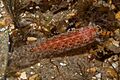
Austrosquilla osculans
-
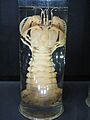
Bathysquilla crassispinosa, museum specimen
-
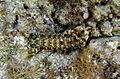
Gonodactylus platysoma
-
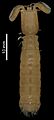
Kasim philippinensis, museum specimen
-
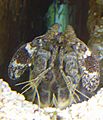
Lysiosquillina maculata
-
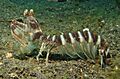
Lysiosquillina maculata outside its burrow
-
Pullosquilla thomassini
-
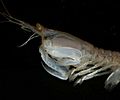
Squilla mantis
-
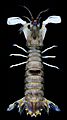
Vossquilla kempi


_001.jpeg)

.jpg)
_Figure_4.jpg)

_Figure_3_(cropped).jpg)
See also
 In Spanish: Estomatópodos para niños
- Alpheidae
